Saving Cochamó: A Community Protects the Wild
Cochamó may be known for its granite peaks and untouched beauty, but its real story is one of fierce local stewardship and a remarkable grassroots push to save what remains wild. At its heart is the Conserva Puchegüín campaign, led by Puelo Patagonia and global allies, racing to purchase a critical swath of threatened land. After years of determination, they stand on the brink of protecting it forever—and unlocking one of South America’s largest wildlife corridors, preserving 1.6 million hectares of wildlands for generations to come. Here is the extraordinary story of how the local community and its allies fought to save Cochamó
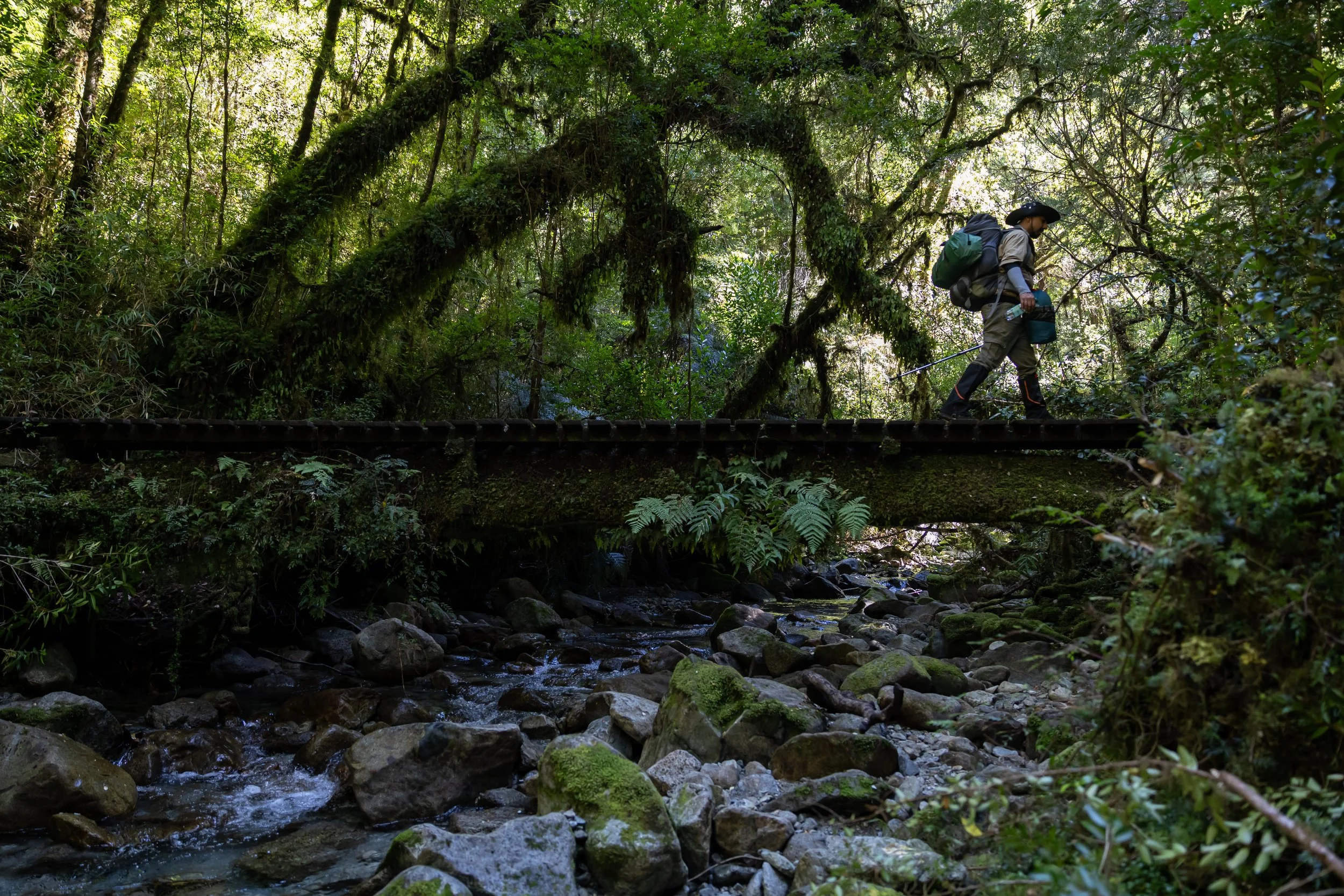
Photo by Hass Salum
Cochamó: There are Few Places Like This Left on Earth
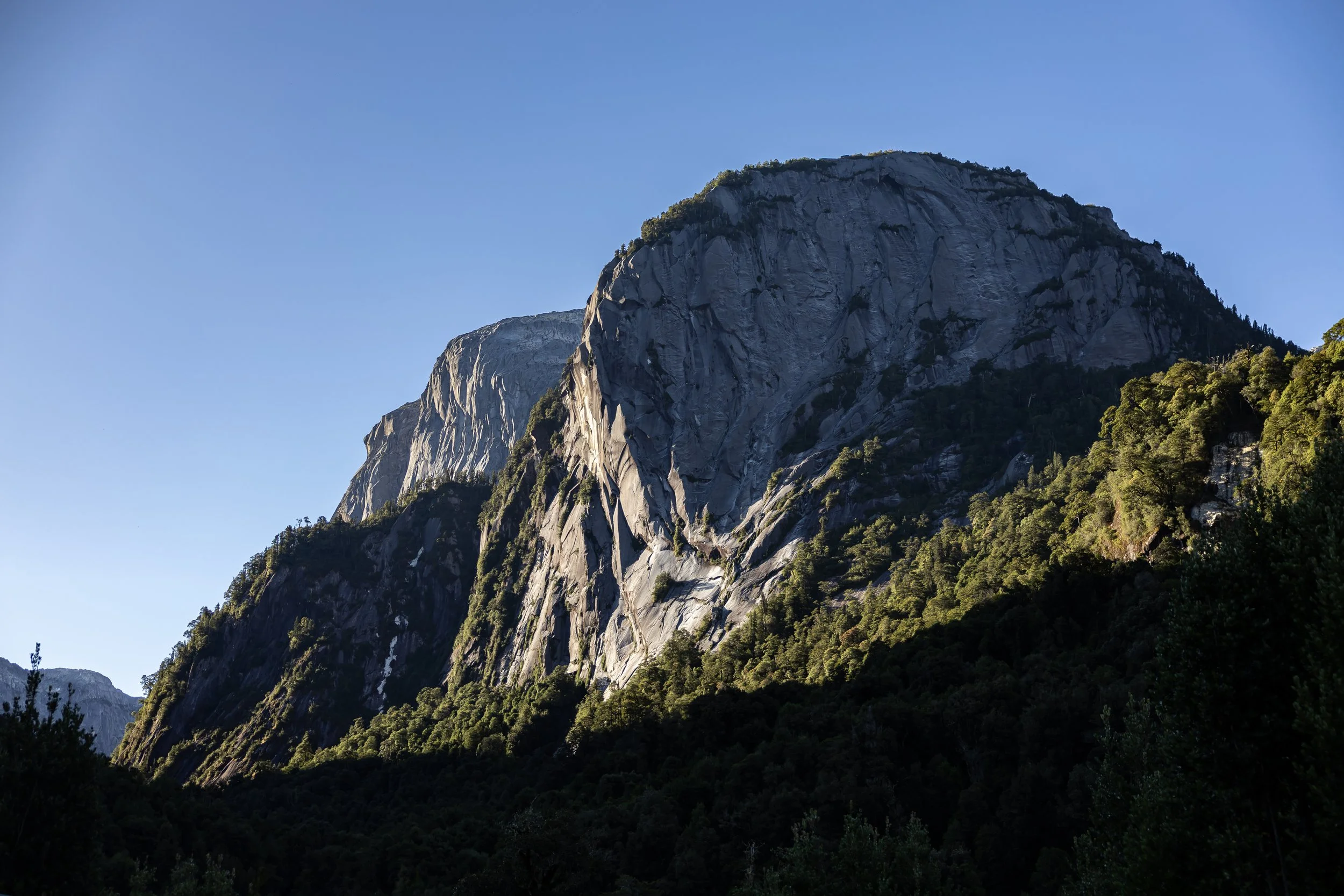
Tucked between the towering Andes and the lush temperate rainforests of northern Patagonia, Chile’s Cochamó is one of the last truly wild places on Earth. Sometimes referred to by outsiders as the “Yosemite of South America” for its soaring granite walls and untouched beauty, locals are quick to point out that this comparison falls short, describing the valley as a much wilder, less-intervened version. Furthermore, this remote sanctuary is more than a scenic wonder—it’s a cultural and ecological treasure shaped by generations of local stewardship and an extraordinary story of grassroots conservation.
“There are few places like this left,” says Matthew Scott, an international donor, who was drawn to Cochamó for its raw, untamed beauty. Yet, “It’s not just the scenery—it’s the soul of the place, the people, the silence, the wildness.”
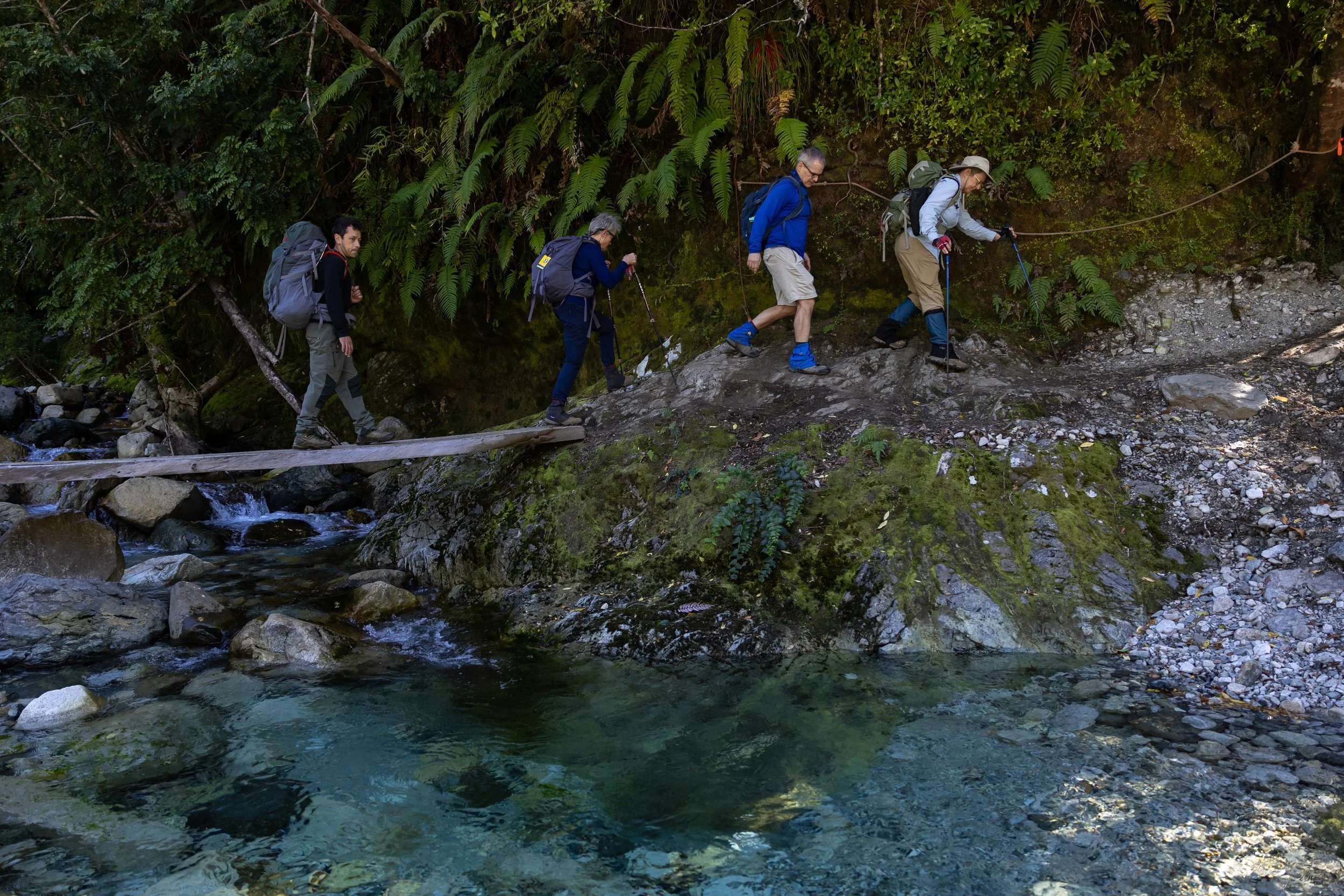
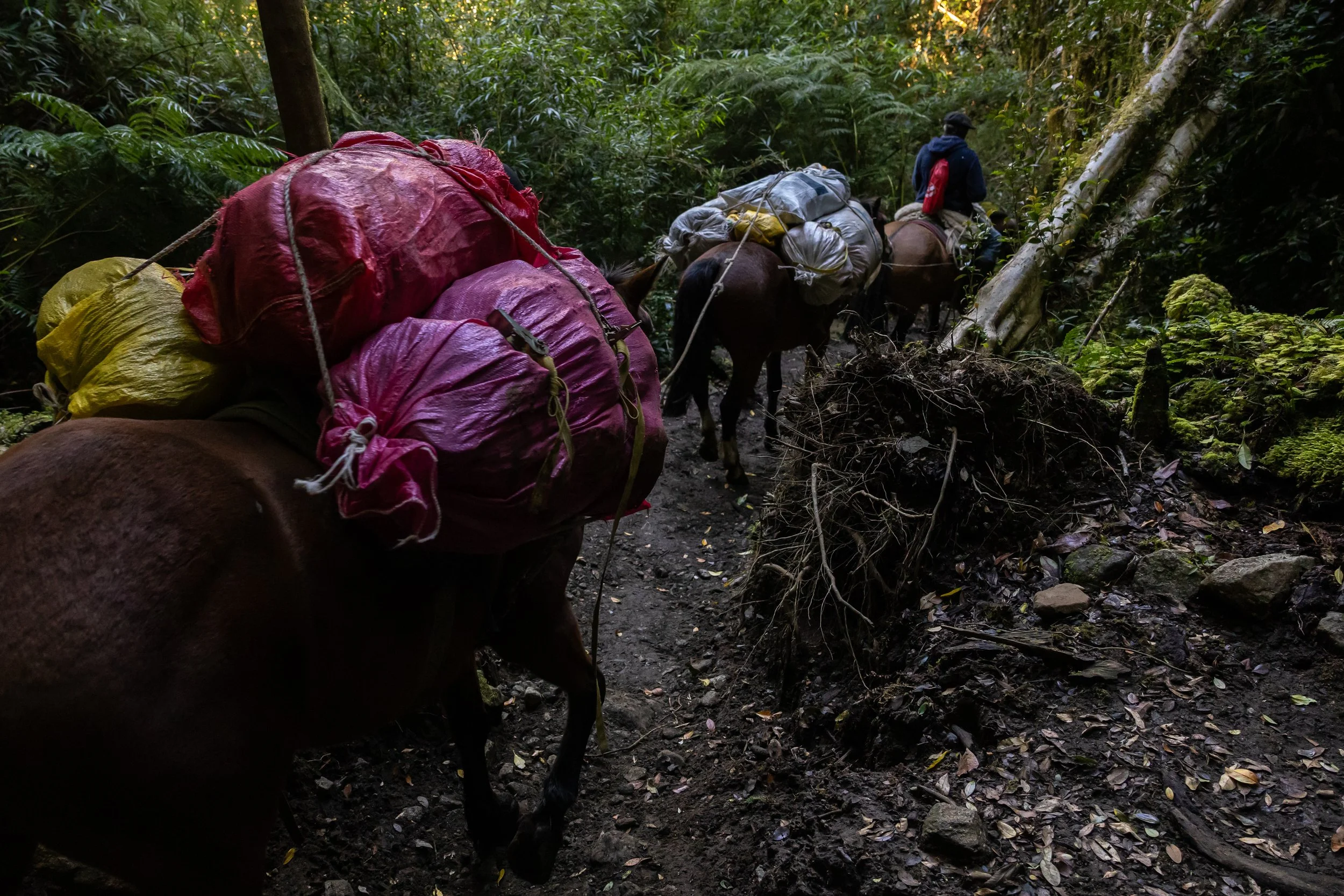
Access demands a 13-kilometer journey on foot or horseback along an old packhorse trail that winds through dense temperate rainforest, across mud, roots, and rocks. Photos by Hass Salum
Drawn to the Valley
For decades, Cochamó was home to a handful of rural families who lived in harmony with the land, tending to small farms, traveling by horseback, and preserving Mapuche and settler traditions in one of Chile’s most remote corners. At the heart of the valley lies Hacienda Puchegüín, a 250,000-hectare estate established in 1924 for agriculture and ranching. Its isolation helped preserve ancient Alerce forests, glacial rivers, and rich biodiversity, leaving the land relatively untouched for decades despite it not being a protected national park.
Beyond its stunning granite walls, untamed forests, and wilderness, Cochamó is a place rooted in history, culture, and—at its heart—people. People like Patricio Almonacid and his family—early pioneers of sustainable tourism—who stayed (when most people had left) and created Cochamó Valley’s first campsite for climbers at La Junta. Local activists like Tatiana Sandoval and her brother Fabien, a gaucho, have fought to protect this land and its traditions for decades. Environmentalists like Rodrigo Condeza and Andres Diez of Puelo Patagonia, a nonprofit organization dedicated to protecting Cochamó against development and financial exploitation. Together with their dedicated teams, they have fought and persevered to protect Cochamó.
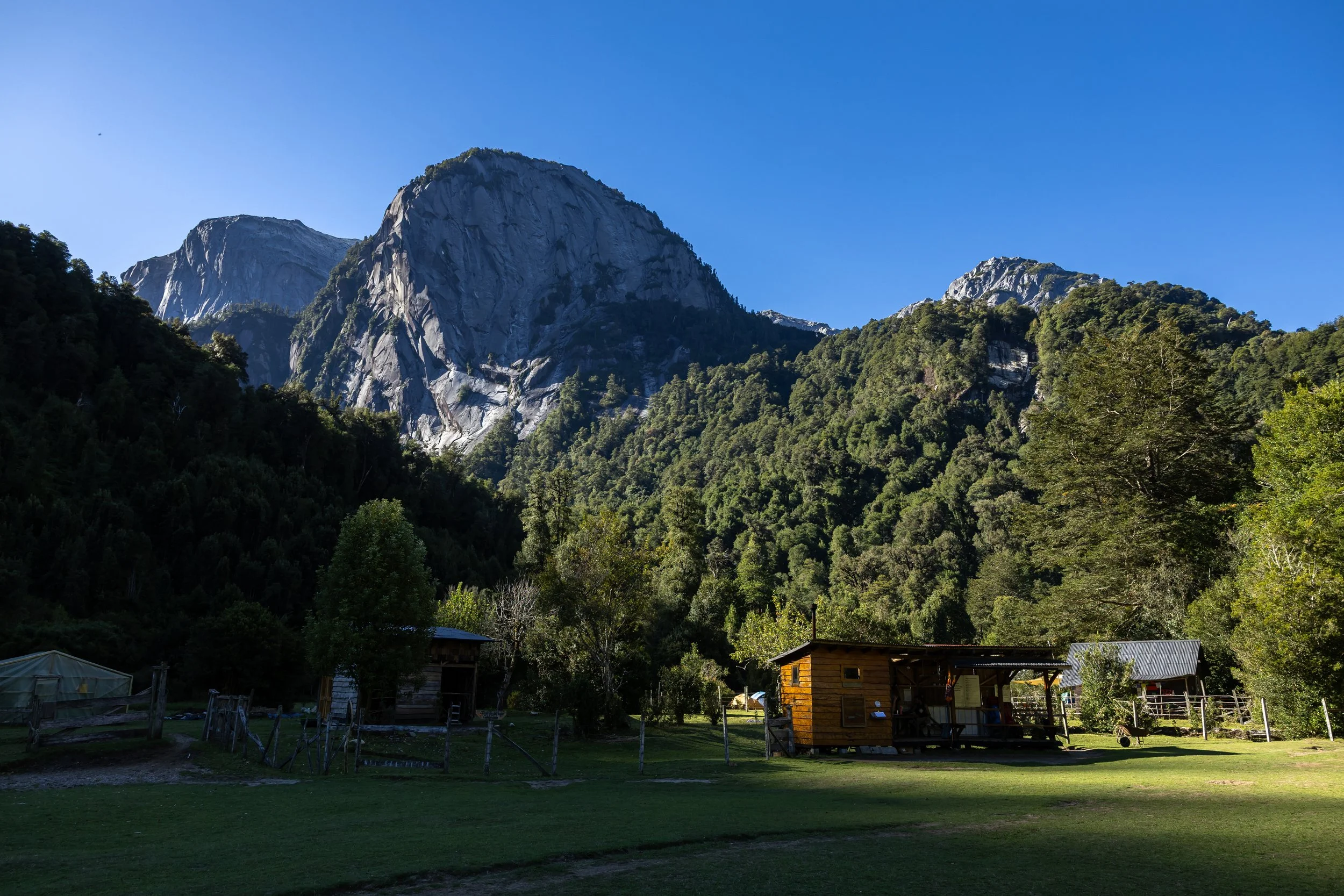
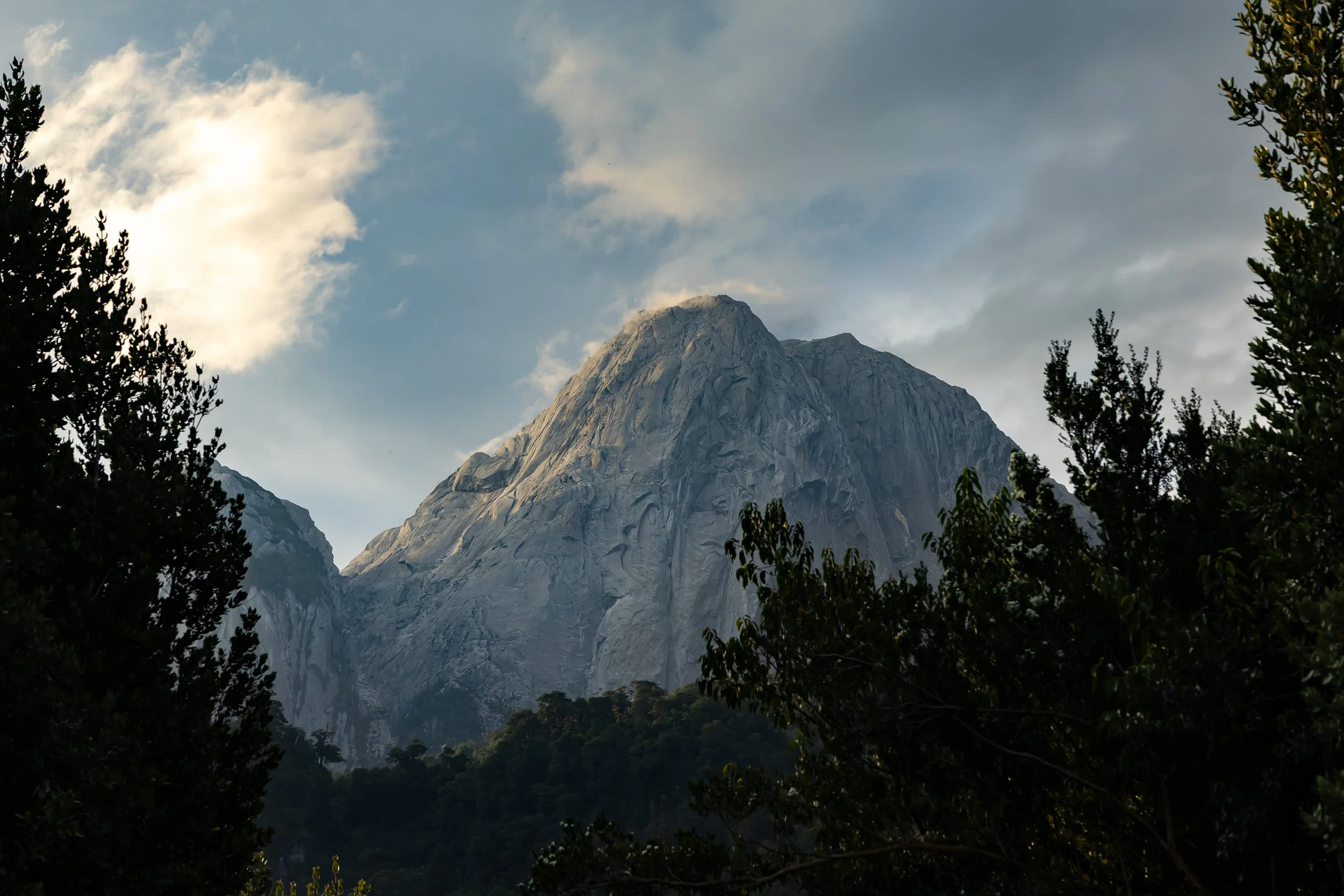
Spectacular views from La Junta inside the Cochamó Valley. Photos by Hass Salum
The Start of Tourism to the Valley
For years, Cochamó Valley remained isolated—a hidden world where culture and nature were left largely untouched. Reaching the valley was never easy. For many years, there wasn’t even a road from the fishing town of Cochamó to the start of the trail to the valley, adding another 10 kilometers on foot. Even today, access demands a 13-kilometer journey on foot or horseback along an old packhorse trail that winds through dense temperate rainforest, across mud, roots, and rocks.
Word of this magical place began to spread in the 1990s, attracting adventurous travelers and climbers drawn by its towering granite domes, remote trails, and pristine wilderness. Around that time, local resident and salmon fisherman Patricio Almonacid opened the valley’s first campsite, realizing he could make a better living caring for the land he loved.
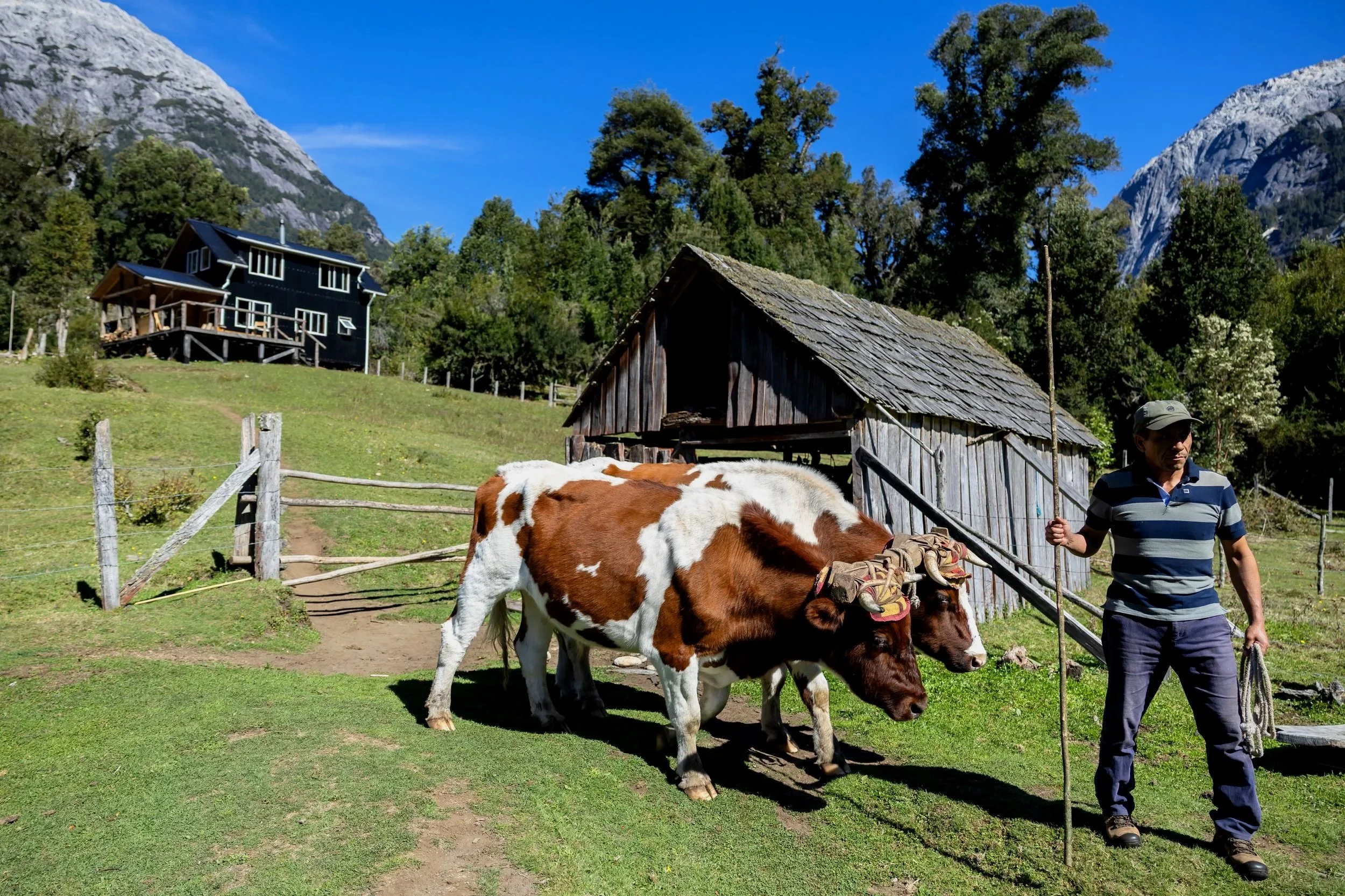
“I was born here. I grew up here, and this is where I’ve lived my entire life. Yet it never stops being beautiful,” says Patricio.
Photo of Patricio tending his cattle. Photo by Hass Salum
Patricio and his family stayed in the valley where they grew their business, along with a handful of other local people who worked the land and stayed year-round in the valley.
Threats to Conservation Emerge
Economic development pressures have long loomed over this pristine stretch of land, but they escalated sharply in the late 1990s when proposals emerged to carve a timber road—and even an international highway—through the valley. For the tight-knit Cochamó community, it was a breaking point. Residents mobilized, joining forces with NGOs and global allies to halt the projects. Their campaign led to a major victory in 2009, when Chile designated the Cochamó River as a Water Reserve, protecting it from extraction and commercial exploitation. But the fight was far from over.
In 2013, the region faced another existential threat: a hydroelectric dam project on the neighboring Puelo River. Led by the NGO Puelo Patagonia, locals and environmentalists mounted a legal and public campaign that ultimately defeated the project in 2016, preserving the region’s hydrological integrity.
Community-Led Conservation and Sustainable Tourism
As Cochamó gained global fame among climbers and tourists, threats also emerged from unregulated tourism. Cochamó Valley used to only have a few thousand tourists. That number shot to 15,000 visitors in the span of 3 months in 2016. The delicate valley saw an influx of visitors, many unprepared for its rugged terrain and lacking awareness of its fragile ecosystems. “Waste, trail erosion, and overcrowding followed, and we knew that we would have to act,” says Patricio. That is when Tatiana stepped in, and Organización Valle Cochamó (OVC) was formed. Patricio, Rodrigo, and others in this tightly-knit community joined the cause, and OVC also gained support from Puelo Patagonia. “I knew that I had to act. To fight to protect this land for the people who live here now and the future generations to come. That is what keeps me motivated and gets me out of bed each day to do the hard work and to fight,” says Tatiana.
Through Tatiana’s leadership, OVC implemented a reservation system (to control daily capacity), developed visitor education programs, and worked closely with tour operators to limit environmental impact. Partnering with ally Rodrigo and the team at Puelo Patagonia, a sanctuary area was created to preserve the most sensitive parts of the valley. Yet the battle was far from over.
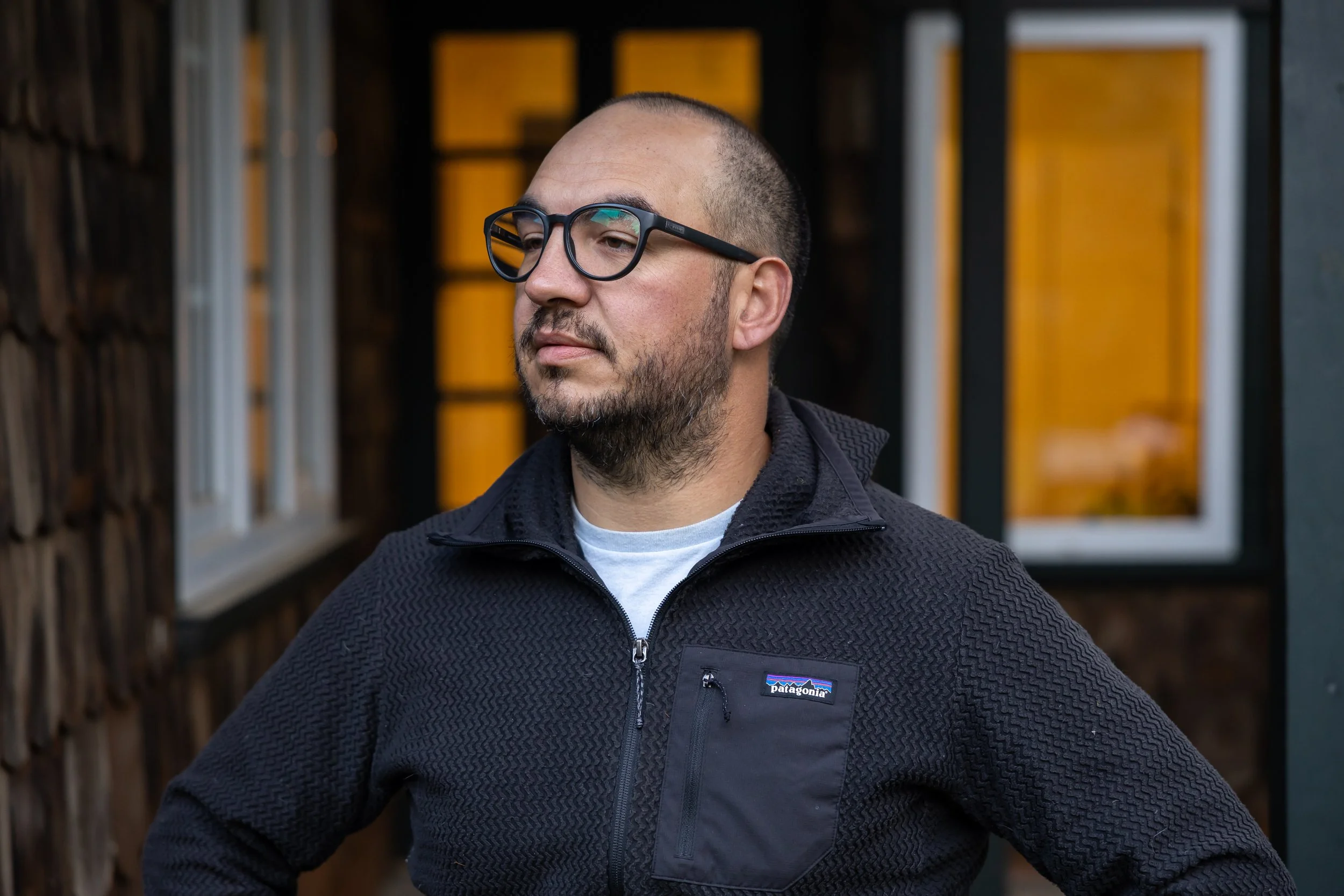
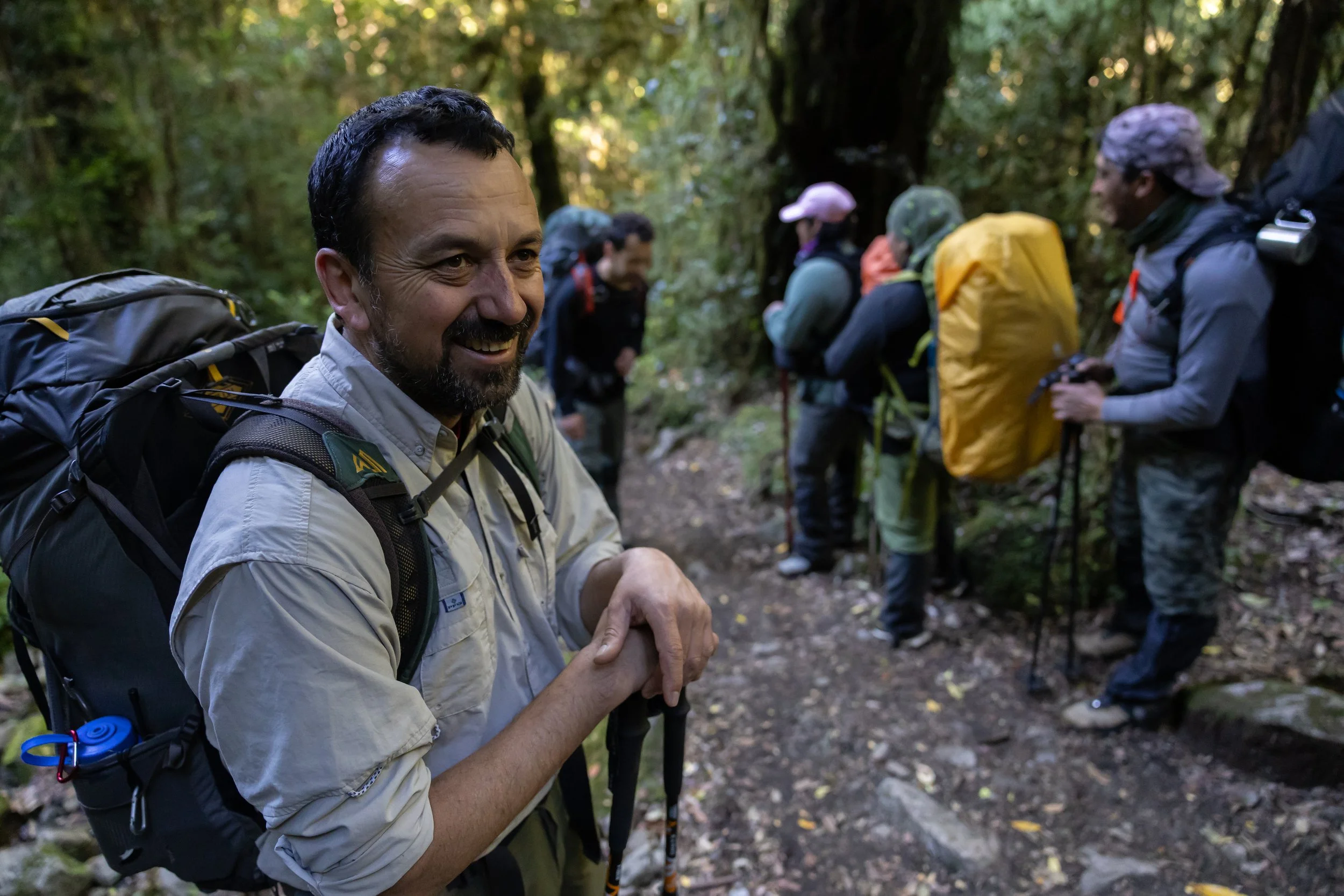
Left: Andres, Right: Rodrigo. Photos by Hass Salum
Protecting Cochamó Valley
The biggest opportunity—and challenge—came in 2022, when the remaining 133,000 hectares of Hacienda Puchegüín were listed for sale. Tatiano, Rodrigo, and the community saw a once-in-a-generation chance to permanently protect the valley. Together, these two small, community-driven nonprofit organizations took charge and tasked themselves with the enormous responsibility and task to raise millions of dollars to protect Puchegüín. Using a collaborative approach, Tatiana personally visited every single resident in this vast region to ensure that their voices were heard in the matter, and Puelo Patagonia worked to gain the backing and support of other, larger global organizations such as The Nature Conservancy, Patagonia, Freyja Foundation, and the Wyss Foundation.
Their relentless hard work and endless effort paid off, and the Conserva Puchegüín campaign was born. This ambitious project aimed to raise millions of dollars to purchase and safeguard the land, ensuring its ecological and cultural value would remain intact for future generations.
And it has been an extraordinary effort. To ensure that all local people of this vast, remote area had a say in the conservation and future of this land, Tatiana physically visited every single house—over 150 in all—in the community, spending days on horseback and camping along the way. “Despite the hours of isolation and the fatigue, I never gave up,” says Tatiana. “I was the bridge between the nonprofit organizations and the local people.” If they succeed in the purchase of this land, it will create one of the largest wildlife corridors in South America, encompassing over 1,600,000 hectares of protected areas.
A Testament of the Power of Community
Fueled by passion, friendship, and an unwavering belief in the value of nature and culture, Cochamó Valley now stands not only as a natural wonder—but as a living, thriving testament to the power of local action to shape the fate of an entire landscape.
When visitors understand the work and sacrifice behind keeping Cochamó wild, they can shift from being consumers to co-stewards. The valley’s protection is no longer just about fighting threats—it’s about building something enduring, together.
“When the first tourists came to this place, they all knew it was a place worth protecting,” said Andres Diez (Puelo Patagonia). “There is a saying that Cochamo takes care of itself. In that case, the people who come here and visit it are the ones who become the guardians of Cochamo.”
Photo by Hass Salum
The Big Win
By the end of December 2025, the Conserva Puchegüín project had positioned itself as one of the most significant conservation initiatives in Chile, after a coalition of national and international organizations set out to raise $78 million to conserve 133,000 hectares in the commune of Cochamó, in Chile’s Los Lagos Region. This remarkable achievement builds on years of local, grassroots, community-driven efforts in the territory, made possible by the long-standing dedication and perseverance of Puelo Patagonia, and by the early organizational and community work carried out by Organización Valle Cochamó (OVC).
The Puchegüín Estate is considered one of the few remaining climate refuges in the world. Its surface area includes 58,000 hectares of old-growth forest and is estimated to harbor almost 11% of the world's Alerce trees, a species capable of storing even more carbon than trees in the Amazon. Furthermore, its famous granite walls and pristine rivers are recognized worldwide as important tourist attractions that contribute to the local economy of an entire region.
It is estimated, that 1,400 families in Cochamó depend on the fresh water contained in this area's extensive hydrographic network, which includes 507 hectares of glaciers, 41 kilometers of lake and lagoon shorelines, in addition to 372 kilometers of riverbanks, and 150 hectares of wetlands and peatlands.