Central Chile’s Araucanía Region has the largest concentration of Araucaria araucana trees in the world. Nicknamed the “Monkey Puzzle Tree,” these ancient trees stand as both a sacred symbol for the Mapuche-Pehuenche people and a natural powerhouse in the fight against climate change.
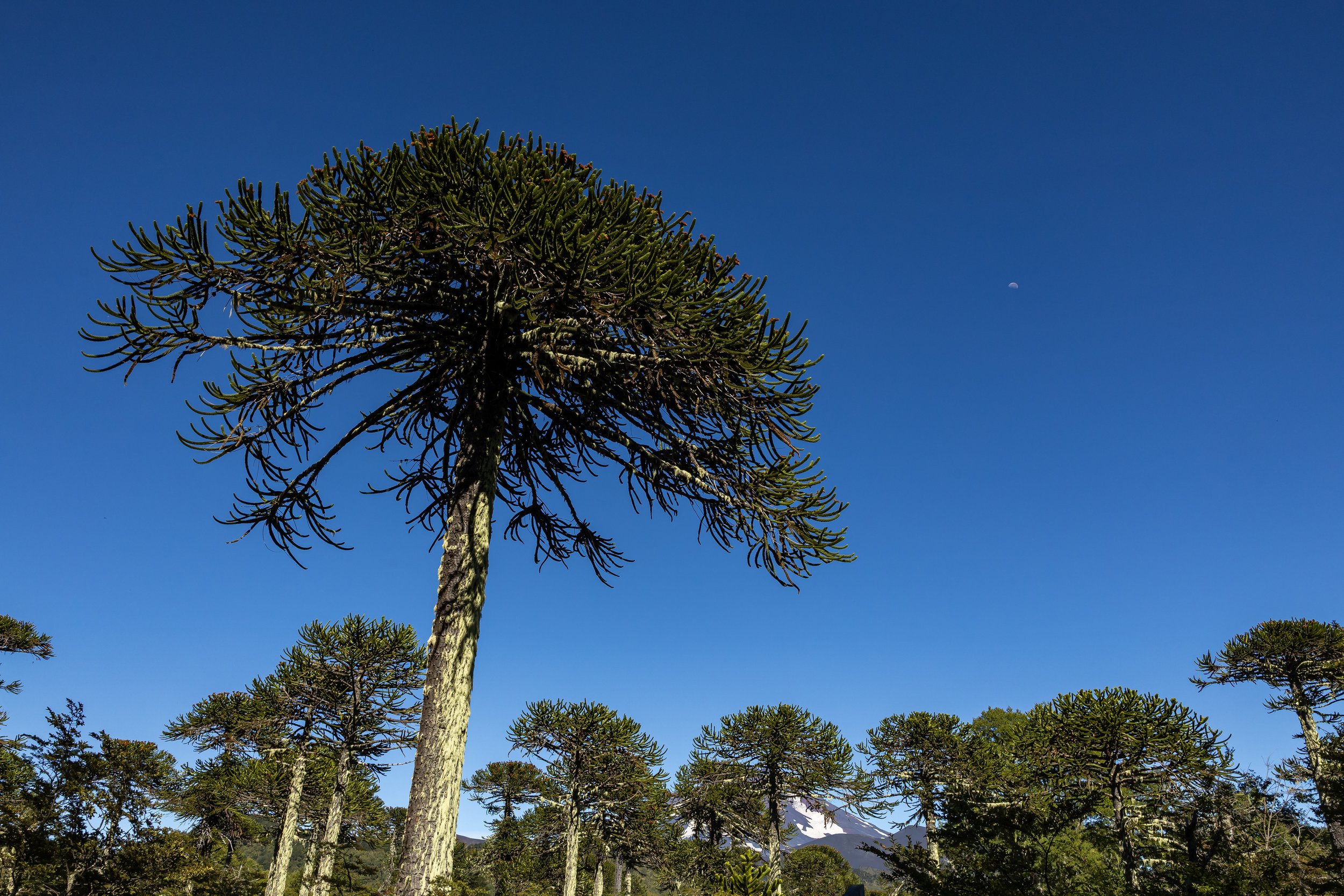
Photo by Hass Salum
Central Chile’s Araucanía Region is renowned for its striking natural beauty—lush forests, pristine glacial lakes, and awe-inspiring volcanoes that have shaped the landscape for over 200 million years. Surrounding areas such as Huerquehue and Conguillío National Parks, along with Chile's first UNESCO Geopark, Kütralkura, help safeguard these ecosystems of rivers, lakes, and forests. This area is home to the world’s highest concentration of Araucaria trees—also known as “Monkey Puzzle” trees—for which the region is named.
Guardians of the Sacred Pehuén
These ancient trees hold deep cultural and spiritual significance for the Indigenous Mapuche-Pehuenche people, whose name, “Pehuenche,” means “people of the pehuén.” Pehuén is the local name for the Araucanía (Araucaria araucana). For generations, the Araucaria has been a vital source of food, identity, and resilience. In the 1990s, the Mapuche-Pehuenche led a successful movement to halt deforestation and protect the sacred forests, continuing their centuries-old stewardship of the land. Their efforts not only preserved a unique ecosystem but also reinforced the deep connection between cultural heritage and environmental conservation, shaping a future where traditional knowledge and responsible tourism can coexist.
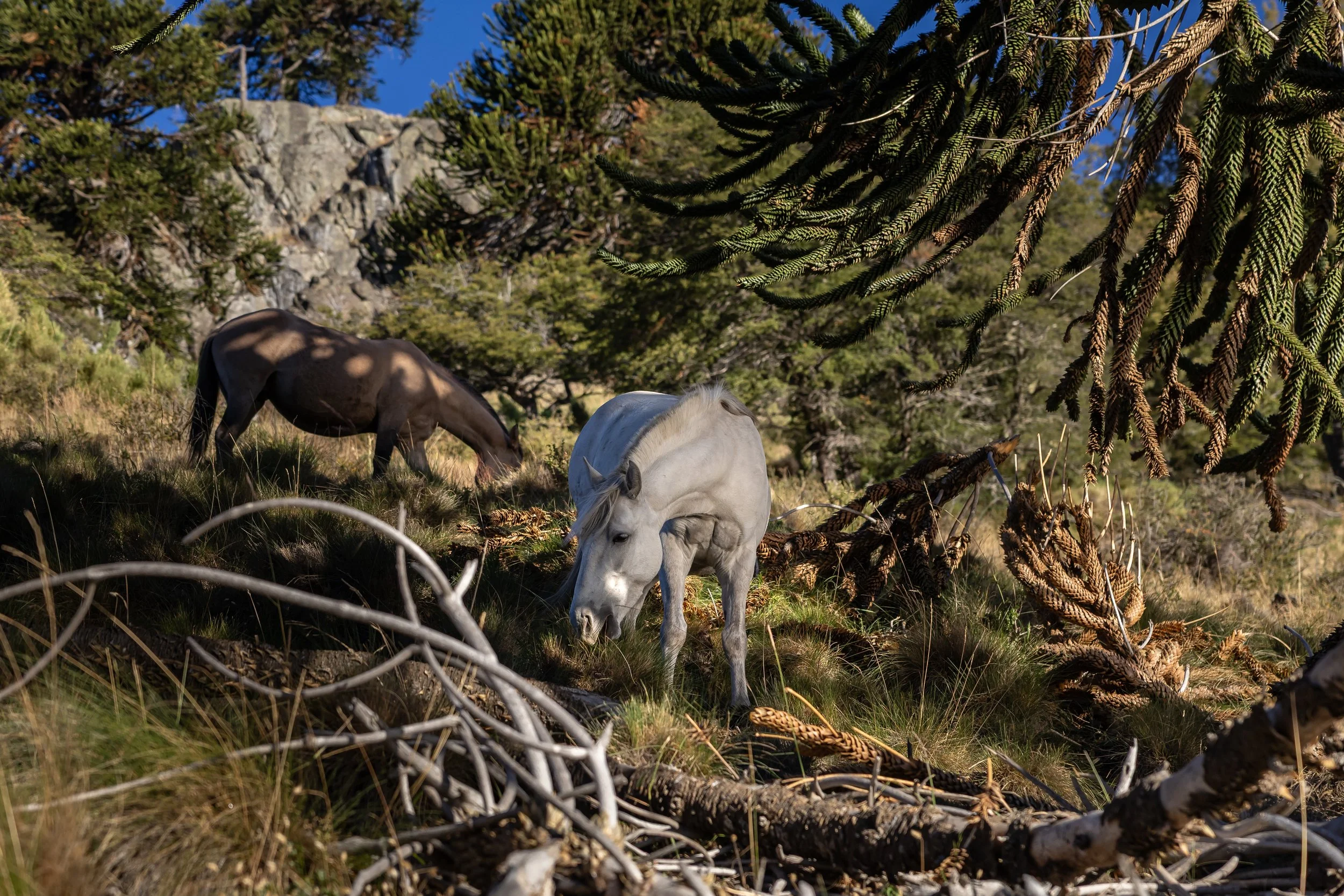
Photo by Hass Salum
Climate Champions
The Araucaria tree is more than just a sacred symbol for the Mapuche people—it is a cornerstone of Chile’s ecological resilience, cultural identity, and climate strategy. Designated as Chile’s national tree and declared a natural monument in 1976, the Araucaria holds deep cultural importance and benefits from strong legal protection. Its impressive size and longevity enables it to store significant amounts of carbon in both its biomass and surrounding soils, significantly contributing to long-term carbon sequestration. Beyond its carbon-capturing capacity, the Araucaria plays a vital role in regulating the local climate and sustaining the water cycle by maintaining soil moisture, stabilizing temperatures, and preventing erosion. The tree is also remarkably resilient—able to withstand volcanic activity, wildfires, and extreme drought—while providing critical habitat that supports biodiversity. These unique traits underscore its invaluable role in mitigating the impacts of climate change.
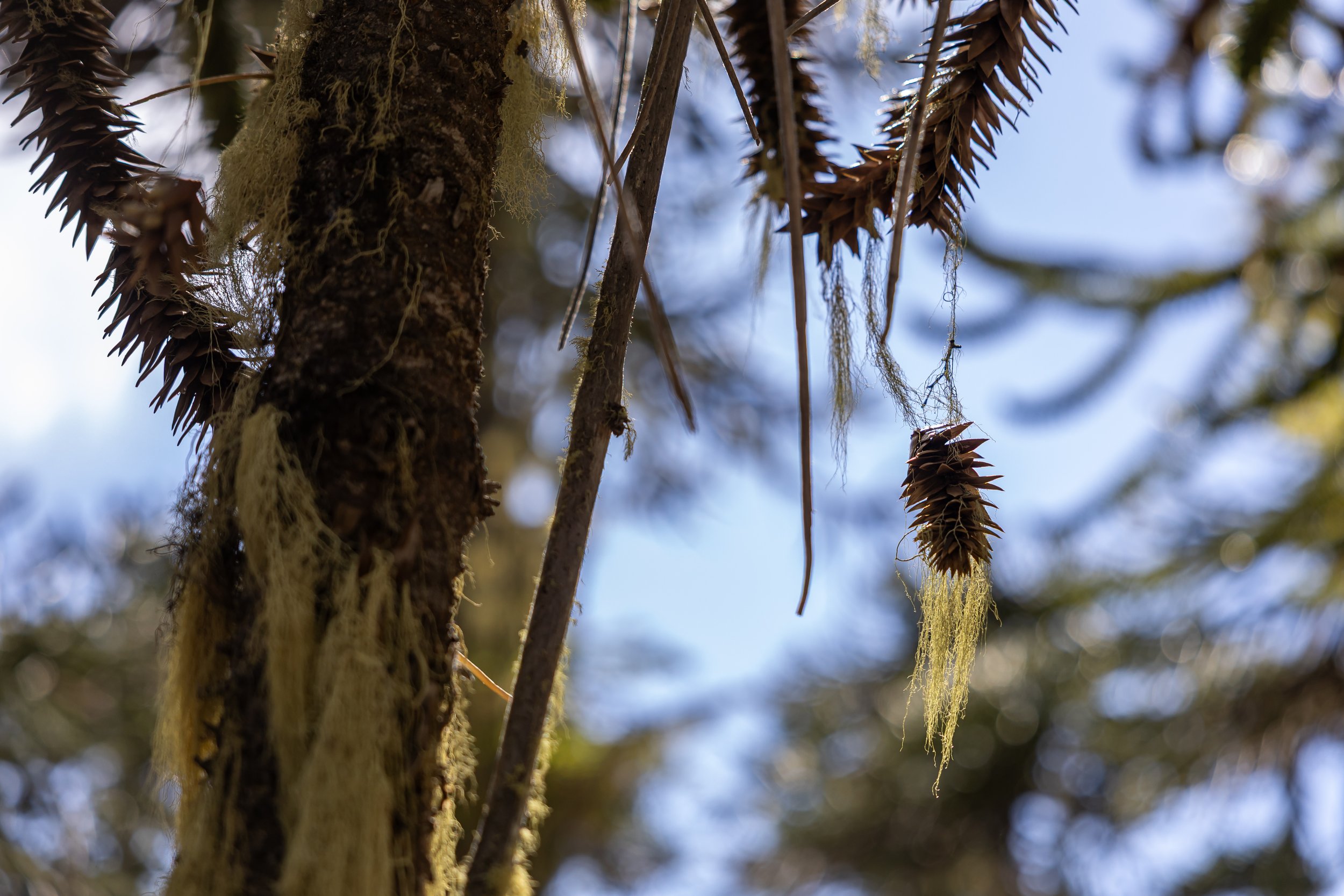
Barba de viejo, or “old man’s beard,” is a lichen that grows on Araucaria trees, named for its long silver-gray, greenish-tinted strands that resemble an old man’s beard. This lichen is essential for healthy ecosystems, serving as an indicator of environmental health while also improving air quality by absorbing pollutants and releasing oxygen. The presence and vitality of Barba de viejo can be used to assess regional air quality: thriving populations signal clean air, while their decline or absence suggests increased pollution.
The Tree that Gives Us Life
For the Mapuche, the Araucaria tree is far more than a source of food—it is a spiritual symbol of resilience and life. “We see the monkey puzzle tree as a mother,” Mathilde says. “She feeds us. No one planted her, no one waters her. She takes care of us and the planet. She’s a gift from God”.
Watch Icalma’s glorious Aracauria forests and witness the power and glory of these ancient trees.